If you work in human resources, one study this week deserves your full attention. Research from the workforce analytics firm Draup, reported by HR Dive, finds that AI is splitting HR into two archetypes. Every HR role now requires data analytics knowledge, while traditional administrative skills are in decline.
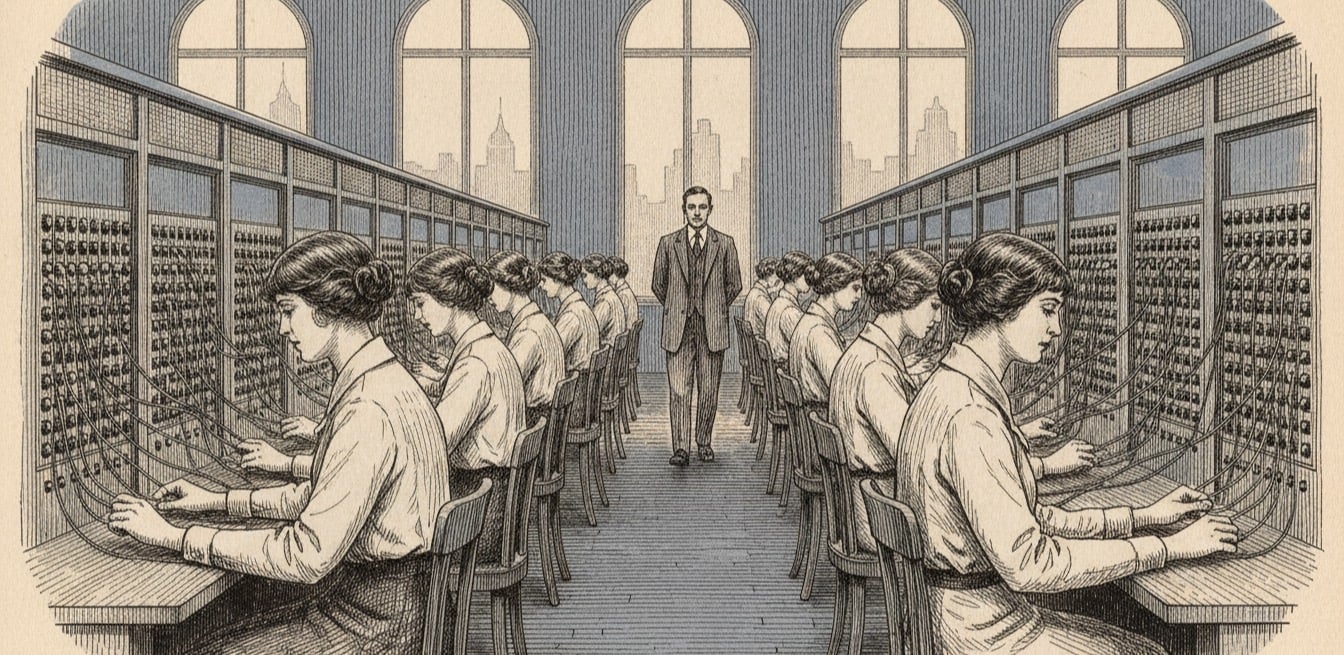
That makes the HR administrator this week's job spotlight. I mean the role built around forms, scheduling, records and first-pass résumé screening. It is the kind of rule-following, document-heavy work that AI handles well. The role isn't vanishing overnight, but its center of gravity is moving. The people in it have a real choice about which half of the split they land on.
Why the administrative side is exposed
AI tools are reaching ordinary office work faster than most people realize. Uber just expanded an enterprise AI agent from a small pilot to all 30,000 of its employees. Across the economy, analysts cited by Fortune estimate AI is eliminating more than 10,000 jobs a month, with 9% of jobs at risk. Routine administrative tasks tend to go first. They are well defined, repetitive and already digital.
Hiring itself is being automated too. The BBC reports that AI recruitment tools increasingly help decide who gets hired. Much of the screening that once filled an HR coordinator's week is now done by software.
Why the judgment side is growing
Here is the part that gets lost in the layoff headlines. As AI spreads, the human problems inside a company get harder, not easier.
Look at performance management. A new survey found that more than half of managers say it is harder to evaluate employees' work after adopting AI. When a report could have been drafted by a person, an agent or both, what exactly are you reviewing? Someone has to redesign how work is measured and rewarded. That is HR's job.
Look at fairness. The same BBC report on AI hiring tools raises hard questions about how fair the process is for job seekers. When an algorithm rejects a candidate, a company needs a human who can explain why, audit the tool for bias and answer for the outcome. This is the trust-and-accountability work I believe becomes more valuable as machines do more of the execution. I make that case in why this wave is different.
Look at how organizations are being reshaped. Even inside an AI lab, the Financial Times reports that Anthropic is hiring relatively fewer junior-level staff while adding more managers and meetings as agents change its work. Fewer entry-level roles and more coordination is an org-design problem. Org design belongs squarely to the analytical, strategic side of HR.
There is a bigger reason this matters, too. A KPMG report finds CEOs aren't yet seeing transformational change from AI. A Fortune analysis argues productivity gains won't show up until companies shift from cost-cutting to building. Whether a company only cuts people or also redeploys them is decided in large part by HR. The function that understands both the data and the people is the one that can steer that shift.
In the companies I've built, the best people-operations hires were never the fastest at paperwork. They were the ones who could see where a team was heading and help people get there. Having the right metrics in places at companies that I work with to know exactly when we need another person, coupled with what kind of person we needed to hire. Now they all need to have some strong AI background.
I won't pretend the transition is painless. Bill Gates says we should prepare for a long stretch of tumultuous disruption. For an HR coordinator whose daily tasks are being automated right now, that is not abstract. It is the next performance review. But the direction of the split is clear, and that clarity is useful.
What to do now
- If you work in HR: Learn data analytics basics now: spreadsheets, dashboards and how to question a model's output. Then volunteer to own the audit of your company's AI hiring or review tools. Be the person who can explain the algorithm's decisions, not the person it replaced.
- If you're switching careers or feel behind: Don't learn alone. Peer groups are springing up, like the fast-growing society bringing midlife women together to learn frontier AI tools. Practicing with others is faster and far less intimidating.
- If you run a business: Before cutting administrative HR staff, ask whether they could run AI oversight, fairness audits or new performance systems. They already know your processes and your people. That knowledge is hard to replace.
- As a citizen: Public retraining works when it targets growing fields. The Labor Department is putting nearly $82 million into rural job training for high-growth industries. Tell your representatives you support retraining and AI accountability in hiring, whichever party they belong to.
The paperwork half of HR is shrinking. The judgment half, the half that keeps work fair, measurable and human, is just getting started. There is still time to move toward it.
Sources
- AI is splitting HR into two archetypes, study shows (HR Dive)
- Uber puts all 30,000 employees on ChatGPT Work (TechCrunch)
- AI is killing 10,000-plus jobs per month and 9% of jobs are at risk, analysts say (Fortune)
- Is an 'AI war' complicating your job search? (BBC News)
- AI promises productivity, but for managers, it's mostly a headache for now (TechCrunch)
- How are AI agents changing work inside Anthropic? (Financial Times)
- CEOs say they're not yet seeing transformational change from AI (HR Dive)
- AI is everywhere except in the GDP numbers (Fortune)
- Bill Gates says to prepare for 20 years of 'tumultuous' AI disruption (The Verge)
- The social society helping women join the AI boom (Wired)
- Nearly $82M government grant targets rural job training (HR Dive)